Wednesday, April 6, 2016

Lessons from the Angolan Civil War


In order to bolster the chances of successfully resolving conflict, interveners should look to the past in order to avoid committing errors that caused earlier peace settlements to collapse. The civil war in Angola is perhaps one of the most illuminating case studies of how efforts to achieve peace can go awry.

The Angolan Civil War erupted in 1975 and ended in 2002 after a series of brief interludes, and featured two main combatants—the People’s Movement for the Liberation of Angola (MPLA) and the National Union for the Total Independence of Angola (UNITA). Given its control of the capital city, Luanda, the MPLA served as the quasi-government of Angola during the civil war, although it struggled to project its authority throughout the rural hinterlands where UNITA operated. 

The Angolan Civil War was primarily an ideological struggle in which belligerents sought to gain control over the state. The MPLA, which adopted a Marxist-Leninist philosophy, derived substantial support from Cuba and the Soviet Union, whereas the more right-wing UNITA was backed by South Africa and the United States. This international dimension made Angola one of the battlefronts of the Cold War, and likely contributed to the conflict’s lengthy duration. Indeed, whenever one side would gain the upper hand, the other could count on its international backers to intervene on its behalf. At the height of its involvement, for example, Cuba had 40,000 troops in Angola fighting in support of the MPLA. This constant supply of international resources precluded a mutually hurting stalemate from arising, as each faction never felt exhausted by the war. 

Foreign interveners finally withdrew from Angola in the late 1980s as the Cold War ran out of steam, and the MPLA and UNITA were left mostly to their own devices. This allowed the aforementioned stalemate to manifest, and the international community re-engaged with the conflict, offering diplomatic support instead of military assistance.

The first major peace agreement implemented during the course of the Angolan Civil War was the Bicesse Accords in 1991. This agreement had four major components: a ceasefire, demobilization, the installment of a UN observation mission, and a commitment to hold presidential elections 16 months after the signing of the accords. 

Measuring the success of peace settlements can be challenging, but if we examine whether the goals of the settlement were achieved, it is clear that the Bicesse Accords failed miserably. The UN peacekeeping mission was under-resourced, and the demobilization process shifted the balance of power in UNITA’s favour, as it maintained 30,000 of its troops to the MPLA’s 10,000. When UNITA lost the presidential election, its leader Jonas Savimbi cried foul and resumed the fighting.


In 1994, international custodians coaxed the disputants back to the negotiating table, which resulted in the Lusaka Protocol. In many ways, this agreement was a significant improvement on its predecessor. It installed a much larger peacekeeping contingent throughout the country, and instead of holding another round of winner-takes-all elections, a power-sharing arrangement was implemented which guaranteed both parties a seat at the decision-making table. By this point, however, the distrust between the MPLA and UNITA was too strong, and after UNITA’s refusal to cede certain territories under its rule, the agreement fell apart. It was not until 2002 that Angola’s civil war finally ended. Savimbi was assassinated by government forces, and UNITA accepted defeat.

The botched peace process in Angola should serve as a cautionary tale to the international community. However, it would be a mistake to assume that efforts towards conflict management should be abandoned entirely. Instead, four major policy implications should be drawn from the Angolan Civil War:

1. Concessions should not be granted to total spoilers. After Savimbi sabotaged the Bicesse Accords, the international community should not have offered him further inducements in the form of a power-sharing agreement. This only whet his appetite further, causing the Lusaka Protocol to collapse. 

2. Peace agreements require a robust third-party presence in order to succeed. Both the Bicesse Accords and the Lusaka Protocol featured peacekeeping missions that were inadequate in demobilizing the belligerents, allowing UNITA to easily resume the war.

3. Building on the previous lesson, peacekeeping missions should be given ample personnel and a strong military mandate. The Bicesse Accords included little more than 1,000 peacekeepers in total, who were only mandated to observe the peace process. While the Lusaka Protocol included 7,600 peacekeepers, this was too little, too late. By that point, neither UNITA nor the MPLA were committed to peace.

4. Winner-takes-all elections could exacerbate conflict if the loser has no incentive to cooperate with the outcome. In Angola, Savimbi easily spoiled the outcome as his troops outnumbered UNITA’s.

While these four policy recommendations are not the only lessons that can be drawn from the Angolan Civil War, they are an appropriate starting point when considering how to design future peace settlements.

By Steven Rai

Recommended Reading:

"Angolan Civil War: A Brief History." South African History Online. Accessed April 06, 2016. http://www.sahistory.org.za/article/angolan-civil-war-1975-2002-brief-history.

"Angola's First Civil War." Global Security. Accessed April 06, 2016. http://www.globalsecurity.org/military/world/war/angola-civil-war-1.htm.

Fortna, Virginia Page. "A Lost Chance for Peace: The Bicesse Accords in Angola." Georgetown Journal of International Affairs 4, no. 1 (2003): 73-79.

Spears, Ian S. "Angola's Elusive Peace: The Collapse of the Lusaka Accord." International Journal 54, no. 4 (1999): 562-81.

The never ending story: The Sudan and the limits of the Comprehensive Peace Agreement

By: Samantha Nicholl

Protest on the CPA in the Sudan in 2009
There was mass international attention on the Sudan in the early 2000s during historic peace talks between the Government of the Sudan (GoS) and the Sudanese People’s Liberation Movement/Army (SPLM/A) which were designed to bring an end to the longest conflict in Africa at the time. The Comprehensive Peace Agreement (CPA) was signed by the GOS and SPLM/A in 2005 and was credited with bringing an end to the twenty-two year long civil war. Following the partition of South Sudan in 2011, a possible outcome accounted for in the CPA, the international community patted itself on the back for a job well done and walked away from the war ravaged Sudan without looking back. The international focus shifted to the newly independent South Sudan, a predominantly Christian and Western allied country, and the remaining agreements under the CPA were left largely unimplemented in the remainder of the country. The Sudan became a forgotten conflict, buried behind the flashy headlines of the day, despite on-going violence that continues to rage in other regions of the country such as Darfur, the Blue Nile, South Kordofan, and Abyei. According to the UNHCR, the situation in the Sudan is rapidly deteriorating with over 2 million internally displaced persons and half a million Sudanese refugees in neighbouring countries. This raises the question: Was the CPA successful at managing conflict in the Sudan?

The CPA was designed to manage the conflict between the GoS and the SPLM/A and it was largely successful at reducing the intensity of violence between these two actors. Unfortunately, this peace came at the expense of broader peace in other unstable regions of the country where armed groups continue to fight against a regime perceived as illegitimate by its citizens. There were a number of challenges with the structure and implementation of the CPA. The first problem was that the SPLM/A was assumed to be representative of the opposition in the Sudan. International mediators made a conscious decision to exclude other opposition groups in the Sudan from the CPA negotiations to avoid over-complicating the process. Unfortunately, this decision separated the conflict between the GoS and the SPLM/A from the larger problems in the country and delegitimized the process in the eyes of other groups. The second issue was that process solidified power between the GoS and SPLM/A rather than creating political space for true democratic reforms to take place. The final issue was that there was no enforcement mechanisms in the CPA once the South gained independence. This meant that the remaining CPA agreements, which called for referendum votes and consultations in other regions of the country, were left unimplemented.  


There is a window of opportunity under Prime Minister Justin Trudeau’s Liberal party government to rectify the past mistakes of the international community. PM Trudeau has pledged to reengage in United Nations peacekeeping and promote international peace and security. As the Liberal government considers its strategy for re-engagement on the international stage, it should focus its gaze on the Sudan and the ongoing UN peace missions inside its borders, UNAMID and UNISFA. Stability in the Sudan is important for larger stability in the region which is threatened by continual interference of the GOS in the affairs of its new neighbour to the South. The UN Peacekeeping missions in the Sudan currently have no representation from major powers in the international community. Canadian contribution to UN peacekeeping in the Sudan sends a message that the international community is still watching and puts pressure on the Sudanese government to fully implement the CPA.   

Separatism in Contemporary Xinjiang


What Is The Conflict & Who Are The Contenders?

Picture the aftermath of an attack by five suicide bombers in a street market killing 31 people in a provincial capital.  Now picture the government response a week later conducting a mass trial of 55 people in a sports stadium with just over 7,000 people in attendance as spectators.  This is just one of many methods that characterizes how both the Uighur’s and the Peoples Republic of China (PRC) have used against each other as a means of conflict management.  The conflict has been growing since the annexation of Xinjiang into the Qing Empire to its amalgamation into the People’s Republic of China (PRC) by Mao Zedong in 1949.  Since incorporation into the PRC, there has been an separatist conflict that is ongoing into contemporary Xinjiang.  However, it appears there is space for some conflict management strategies to cease conflict but ultimately, the technique most likely to work is one where both sides fighting it out until one side is victorious over the other in achieving their goals and objectives.

What Are Both Parties Seeking?

From the perspective of the Uighur’s the goal appears to be a continued fight – peaceful and violent – for negotiations and independence from the Chinese state in some form.  The Uighurs in Xinjiang have had independence three times between 1750 and 1949, have been subject to attacks on Uighur culture through means such as language policies, openly advocating for negotiations, refuse conversion and integration into the Chinese state and norms, are joining the Islamic State in opposition to the Chinese state, and are conducting domestic terror attacks throughout China such as in the Kunming attacks in 2014.  The Uighur’s have advocated for negotiations indicating a voiced desire to engage in dialogue and resolve conflict coming from within these communities, it is of equal importance to examine the perspective of the PRC.  Yet, the PRC appears to avoid engaging the Uighur community in any form of dialogue but will engage them through means of violence and repression, some of which are mentioned below.
 
From the perspective of the PRC it appears the goal has been towards assimilation and maintaining control over the region.  This is evident in numerous instances such as how the Chinese government continues to pursue language policies against the Uighurs Turkic culture and language, criminalizing Uighur cultural practices, labeling the Uighur Community as terrorists, and the continued mobilization of security forces into the province to enforce the state and police Uighur communities.  It is also important to note Xinjiang is seen by Beijing as the most crucial province to maintaining the stability and unity of the Chinese state, how the province is integral to managing national security given how the province borders eight countries, how China’s economy largely depends on this region for trade and natural resources, provides China with access to the rest of Asia.  Furthermore, claims of independence are unacceptable to a government who places so much importance on sovereignty and regime legitimacy while not appearing to be weak domestically and internationally and is arguable therefore more open to the idea of fighting until complete victory.

Techniques To Apply & Prospects For Success Or Failure

Aside from both sides fighting against each other until one is victorious, power-sharing and partition could also be a management technique to end the conflict.  Xinjiang is an autonomous region which means the province and its inhabitants are already decentralized from the PRC and therefore have a potential foundation to build upon.  However, this faces the obstacles of how the Uighur community will not completely assimilate into state-run institutions in addition to having the Chinese government labeling Uighurs as terrorists which has further removed their legitimate political agency to engage with the Chinese government.  Any form of power-sharing and partition would constitute further decentralization from Beijing which would directly challenge and threaten the legitimacy and strength of the Chinese government.  The PRC will arguably do whatever it has to do in order to ensure and enforce its legitimacy and control over its territory and therefore any form of independence or forfeiture of sovereignty is not an option.

Furthermore, it could be possible for both sides to enter into a mutually hurting stalemate that may result in the cessation of conflict.  This will require both the PRC and the Uighur population to resolve their conflict when they are ready and when they are in an intolerable and costly situation in which either side cannot escalate the conflict to victory nor lose to one another and thus increasingly appears both sides will have to fight it out until one is victorious over the other.  However there appears to be little indication that both sides recognize the existence of such conditions given how they continue to engage in violence against each other in which neither side appears to be surrendering to one another.

Conclusively, it appears there is space for some conflict management strategies to cease the ongoing separatist conflict in contemporary Xinjiang however the most plausible technique appears to be leading towards fighting it out until one side emerges victorious.  On a side note, external actors may have a role to play as potential veto players given how the PRC does allow such influence and intervention.  However, the PRC has only allowed support on the side of the Chinese government.  This support comes from the countries of, Egypt, Saudi Arabia, Pakistan, Russia, Kyrgyzstan, Turkey, and the United Arab Emirates. 

Did Economic Sanctions End the War in Rhodesia?

By Steve Goodman

Background:


The war that took place in Rhodesia between 1964 and 1975 is known by different names: the Zimbabwe War of Liberation, the Second Chimurenga, or the Bush War. Just as there are multiple names for this war, there are multiple perspectives in framing this conflict.  To the white minority of three thousand who lived in the southern African county, it was a struggle against Communism and a fight to preserve a way of life. To the black nationalists seeking to establish majority rule, it was a struggle for equality representative democracy, and independence. This little-known chapter in the Cold War has received relatively little scholarly attention from a conflict management perspective. Most likely, this is because of the distasteful and exclusionary nature of the Smith government. Although the regime might have been abhorrent, the Bush War itself is not best left relegated to the past, because we can learn lessons about conflict management from it.

The Conflict:

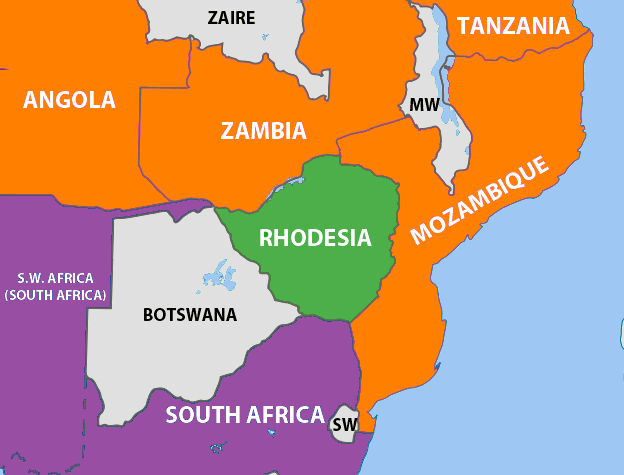
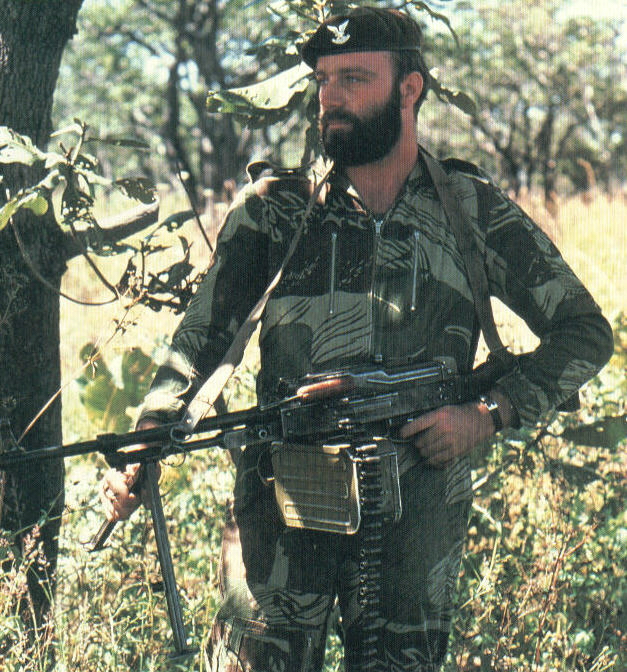
scoutguner.jpg (627×672)When Ian Smith unilaterally declared independence from the United Kingdom in 1965, he sought to lock down the hegemony of the white settler minority in Southern Rhodesia, fearing that his country might end up swept up in a Communist insurgency led by black nationalists such as in Zambia or Angola. As might have been predicted, shoring up white minority rule in Salisbury was a call to war for black nationalists. The Maoist Zimbabwe African National Liberation Army (ZANLA) and Marxist-Leninist Zimbabwe People's Revolutionary Army (ZIPRA) took up arms against Smith's government, engaging in open conflict at first, and then resorting to guerrilla tactics through the 1970s. When the Estado Novo regime in Portugal fell in 1974, Mozambique became independent, and ZANLA especially found an ally and territory from which to launch its operations. The conflict intensified through the mid-1970s, and had spread throughout Rhodesia, with ZIPRA concentrating in the northeast in and around Zambia and southwest in and around Botswana, and ZANLA using the border areas of Mozambique to conduct operations. As the conflict grew increasingly bloody, the US and UK called for a negotiated settlement. When the counterinsurgency was still going well, Salisbury was reluctant to agree to a cessation of hostilities. However, the Bush War drew itself out to become a war of attrition. The international community, and especially the United States and United Kingdom, sanctioned the Smith government since its establishment. Apartheid South Africa, for its part, provided a resource corridor for the Rhodesian government by allowing fuel and supplies into the country to feed the war effort. However, by the late 1970s, time was no longer on Smith's side, as the economy took a downturn due to increasing numbers of white males being drafted, increased sanctions, and the flight of many of the white settlers from the country. In a military stalemate and with even South Africa wishing to distance itself from Rhodesia, Smith finally agreed to a negotiated settlement. He came to share power with black moderates within the country and the state of Zimbabwe-Rhodesia was created. Finally, elections took place in 1979, with the majority of votes in favour of returning to colony status. With black majority rule now in place, the UK granted Zimbabwe independence in 1980.

What Difference did Sanctions Make?

Economic sanctions had the effect of isolating landlocked Rhodesia. The country's neighbours, with the notable exceptions of South Africa and Mozambique, had the effect of walling the country in so that not just trade but resupply for the war effort could barely take place. The black nationalists enjoyed increasing support from neighbouring countries and were trained and supplied by Communist states such as East Germany and the Soviet Union. After 1974, Mozambique also provided state support to ZANLA, and Rhodesia gained another hostile neighbour. Moreover, Pretoria's policy developed towards distancing itself from the white settler regime, leaving Smith without a friend in the world. In this light, real pressure was coming down on the Salisbury as the resource-hungry security forces were without long-run chances of resupply after a decade and a half of war. Although sanctions alone might not have broken the back of Smith's war effort, the combined isolation effects and the declining economic situation due to labour problems made a negotiated settlement look like the best option possible.

Why Should we Care?

The example of Rhodesia shows us what can happen when the international community takes a unified approach in dealing with an illegal regime. Rhodesia became a pariah state such that eventually not even Apartheid South Africa would support it. Rhodesia's economy pre-conflict was strong, but declined steadily as the costs of war mounted. This also demonstrates the vulnerability of a landlocked state to a sanction regime. It is worth noting that Western states took little action beyond diplomatic and economic pressure on the Smith government. A military invasion of Rhodesia was not necessary to see the transition to black majority rule in the country. 

Further Reading:

Mills, Greg, and Grahame Wilson. “Who Dares Loses? Assessing Rhodesia’ Counter-Insurgency Experience.” The RUSI Journal 152.6 (2007): 22-31. Web. 04 Apr 16. http://www.thebrenthurstfoundation.org/files/Who-Dares-Loses.pdf.

Onslow, Sue, ed. Cold War in Southern Africa: White Power, Black Liberation. London: Routledge, 2009. Web.

Tuesday, April 5, 2016

Managing conflict in Afghanistan by developing police force capacity By E.J. Edwards

The Conflict

Conflict in Afghanistan since 2001 has been a contest between the Government of the Islamic Republic of Afghanistan (GIROA) and armed insurgent groups including the Taliban, Islamic State – Khorasan Province, and the Haqqani Network, each of which is seeking to delegitimize and topple the GIROA to carve out a state-like entity under their own control and ideology. (Katzman, 2016) International assistance to sustain, develop, and expand the GIROA’s governance has taken various forms including financial and technical aid, developing the capacity of the Afghan National Security Forces (ANSF) as well as military intervention to combat the insurgency.  The main vehicle for international military assistance has been the North Atlantic Treaty Organization’s (NATO) deployment of the International Security Assistance Force (ISAF), which in addition to training the ANSF provided security to much of the country from 2001-2014. (Council on Foreign Relations, 2014) Violence in the country has fluctuated since the commencement of hostilities in 2001 with high-points occurring in 2006, 2009, and more recently as ISAF troop levels have declined. (Council on Foreign Relations, 2014) Throughout the last fifteen years, insurgents have relied heavily on guerilla and terrorist tactics including suicide bombings, targeted killings, IEDs, ambushes and occasionally large-scale attacks on civilians, aid workers, ISAF forces and Afghan government forces.

Managing the Conflict

As part of the broader international intervention in Afghanistan, ISAF and international actors have sought to develop the capacity of local security forces, with the aim of transitioning responsibility for the provision of security into Afghan hands. Security Sector Reform is the overarching concept guiding this process and is defined as “re-constituting state-level institutions, enabling domestic civil society organizations to engage in SSR processes, or providing technical training or material support”. (Donais, 2008) The establishment and development of the Afghan National Police has been a central pillar of the conflict management through SSR strategy, and has been driven by various missions led by Germany, the European Union, NATO, the U.S. Army and individual agencies like Canada’s Royal Canadian Mounted Police (RCMP). Each effort has followed the same logic and aim of moving from limited or non-existent local capacity and local ownership to high local capacity and local ownership; from a situation where external actors are responsible for providing security, to a state where the external actors have been transitioned out and local forces are responsible for security.

Evaluating Success

Afghanistan does not possess a professional, sustainable, or independent police force, this is not to say the conflict management efforts of the international community have been a failure, merely that there have been pernicious challenges which have inhibited the overall realization of this goal. The first of these challenges was the absence of a unified strategy at the outset of the mission, which instead relied on ‘lead nations’ to independently develop the various compartments of Afghanistan’s security sector. The second challenge has been a breakdown in the tandem development of local capacity and local ownership, as evidenced by the Afghan Local Police (ALP) in which a lack of training and professionalism paired with a dependence on the ALP for policing services is a recipe for strategic failure. (Murray, 2011) A third challenge to the ANP’s development is a reliance on military trainers and curricula which influences the ethos, application, and practices of the police service in Afghanistan; this has been problematic in transitioning to post-conflict stabilization. The final factor which has inhibited progress is the overuse of police forces as counterinsurgents, the result of which has been high attrition rates and officers poorly suited to conventional policing. (Murray 2011) The gray area between kinetic military operations and civilian policing is a necessary step for the type of state-building the Afghans and their partners have pursued, but the overuse of the police as counterinsurgents and the ad hoc approach which characterized their application shows a failure in planning and in understanding the strategic COIN environment.

Recommendations for Canada

11. Advocate for unified SSR strategies which are integrated among international partners and include significant contributions from local actors according to their needs, realities, and priorities.

22. Maintain reputation as a credible donor by seeking capacity development opportunities which are founded on sustainable and strategic goals for developing local training and institutional capacities.
33. Provide police personnel for capacity development missions and emphasize through multilateral avenues their value added in comparison to military personnel fulfilling the same role.

44. Encourage distinction in the minds of international and local partners between war-fighters, counter-insurgents, and police officers, by offering unique support to training and equipping each of the three.

Sources and Additional Information

Council on Foreign Relations. (2014). U.S. War in Afghanistan 1999-Present. Retrieved from Council on Foreign Relations: http://www.cfr.org/afghanistan/us-war-afghanistan/p20018
Donais, T. (2008). Local Ownership and Security Sector Reform. Geneva: Geneva Centre for Democratic Control of Armed Forces.
Katzman, K. (2016). Afghanistan: Post-Taliban Governance, Security, and U.S. Policy. Washington: Congressional Research Service.

Murray, T. (2011). Security Sector Reform in Afghanistan, 2002-2011: An Overview of a Flawed Process. International Studies, 48(1), 43-63.